Venue
Aereile Jackson, Tent City, Los Angeles

Aereile Jackson, Tent City, Los Angeles

Apple harvest Betuwe

Apple harvest Betuwe

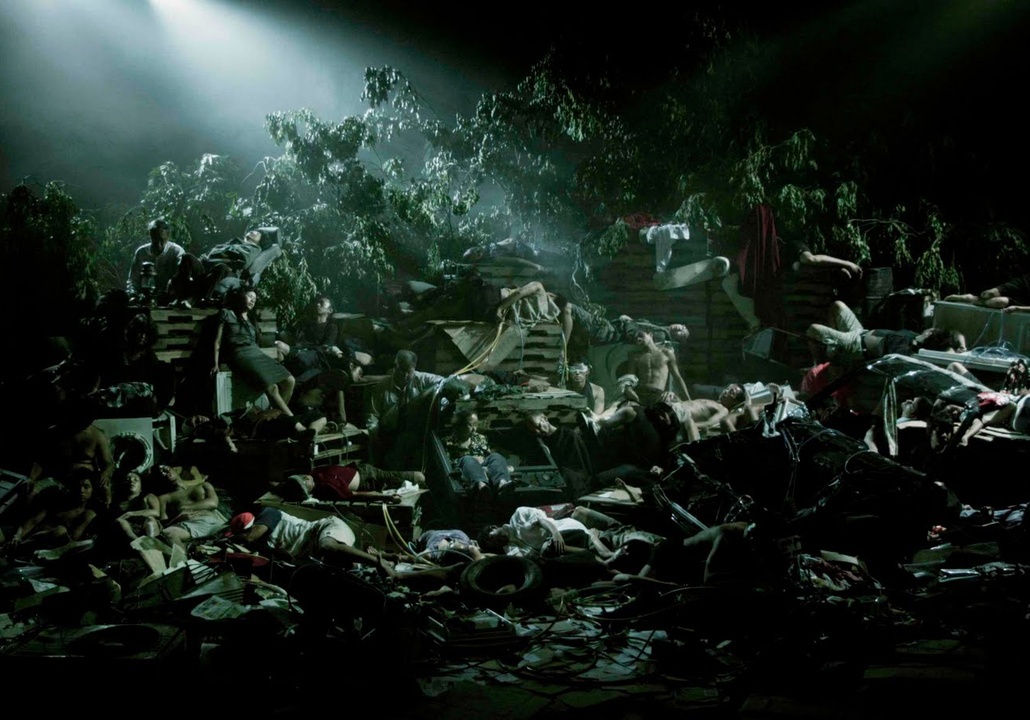
Donlim factory worker, Shenzhen

Donlim factory worker, Shenzhen

Born 1932, San Francisco, United States of America

Lives and works in United States of America and Paris, France

Noël Burch has been publishing books since the 1960s and these include Theory of Film Practice (1973) and To the Distant Observer: Form and Meaning in Japanese Cinema (1979), which remains the seminal history of Japanese cinema. While he is primarily known as a writer, Burch is also a filmmaker and has directed over 20 films, most of which are documentaries. Burch is the co-founder and director of the Institut de Formation Cinèmatographique, an alternative film school connecting theory and practice.

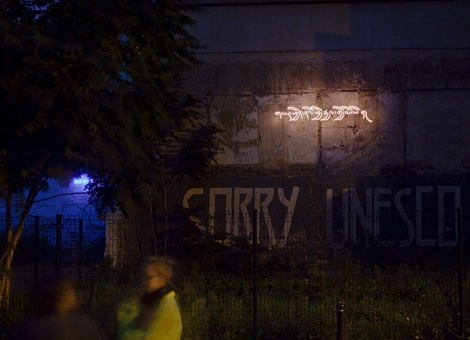
‘Sekula and Burch’s film asks us to consider those critical spaces between the local and the global...’

Alex Davidson, Curatorial Assistant, Artspace, Auckland

The Forgotten Space

2010
The Film Archive

film essay / feature documentary, English subtitles
110:00min
producers: Frank van Reemst, Joost Verheij
co-producers: Vincent Lucassen, Ebba Sinzinger
courtesy of DOC.EYE Film


Venue
Right of Way, 2013 (still)

Right of Way, 2013 (still)

Right of Way, 2013 (still)

Right of Way, 2013 (still)

Born 1982, Ngāpuhi, Samoan, Niuean
Lives and works in Auckland, New Zealand

Born 1982, Ngāpuhi, Samoan, Niuean
Lives and works in Auckland, New Zealand

Janet Lilo is an interdisciplinary artist interested in the politics of space and the exploration of popular culture within a localised framework. Her work includes appropriated amateur photography and video from online platforms, music videos, vlogs (video logs) and experimental documentary. With a keen eye for online trends Lilo has recorded people’s behaviours and interactions and displayed them on monitors and objects in gallery spaces, the sides of buildings, in museums, the internet, bus stops and billboards. Recently she created internet art projects specifically for YouTube, establishing a bridge between global online communities and the local communities of Auckland.

Listen to Janet Lilo in conversation with Nina Tonga at Artspace as part of the 5th Auckland Triennial.

Selected exhibitions (solo):

Identi-tee video, Auckland War Memorial Museum, 2012; Top16, Beachcomber Contemporary Art Gallery, Rarotonga, 2010; Man in the mirror, ICC building, Higashi Sapporo, 2009; MYFACE, Fresh Gallery Otara, 2009; Top16 x 2, Fresh Gallery Otara, 2008; Selected exhibitions (group): Contact, Frankfurter Kunstverein, 2012; Home AKL, Auckland Art Gallery, 2012; Rituels, Tjibaou Cultural Center, Noumea, 2011; Niu Pasifik: Urban Art from the Pacific Rim, CN Gorman Museum, University of California, 2010; Nonsense, CAI02 Gallery, Sapporo, 2009.

‘...Lilo captures real moments of local life: street scenes, candid performances, community dialogue and urban landscapes.’

Nina Tonga, art historian and Professional Teaching Fellow, Centre for Pacific Studies, The Universi

Right of Way

2013
Artspace

installation with photos, park benches, HD video, sound
courtesy of the artist


Studio Mumbai (Bijoy Jain)

Copper House II, Chondi, Maharashtra, India, 2010

Copper House II, Chondi, Maharashtra, India, 2010

Palmyra House, Nangaon, Maharashtra, India, 2007

Palmyra House, Nangaon, Maharashtra, India, 2007

Palmyra House, Nangaon, Maharashtra, India, 2007

Palmyra House, Nangaon, Maharashtra, India, 2007

Born 1965, Mumbai, India
Lives and works in Mumbai, India


Bijoy Jain is an architect and founder of Studio Mumbai, a contemporary and award-winning architectural practice drawing on the traditional skills and expertise of India’s craftspeople. Creating a studio where skilled stonemasons, wood workers and other traditional trades do not simply execute his projects but are regarded as advisors and collaborators, Jain has enabled a rediscovery of traditional knowledge and the sustainable use of local resources.

Drawing upon the Indian landscape and regarding it as a resource, Studio Mumbai have created buildings as diverse as private residences, public spaces, research centres and rural retreats formed by local climatic conditions, materials and technologies.

‘An architectural practice almost unique in the world, Studio Mumbai redefines the construction process...’

Andrew Barrie


Venue
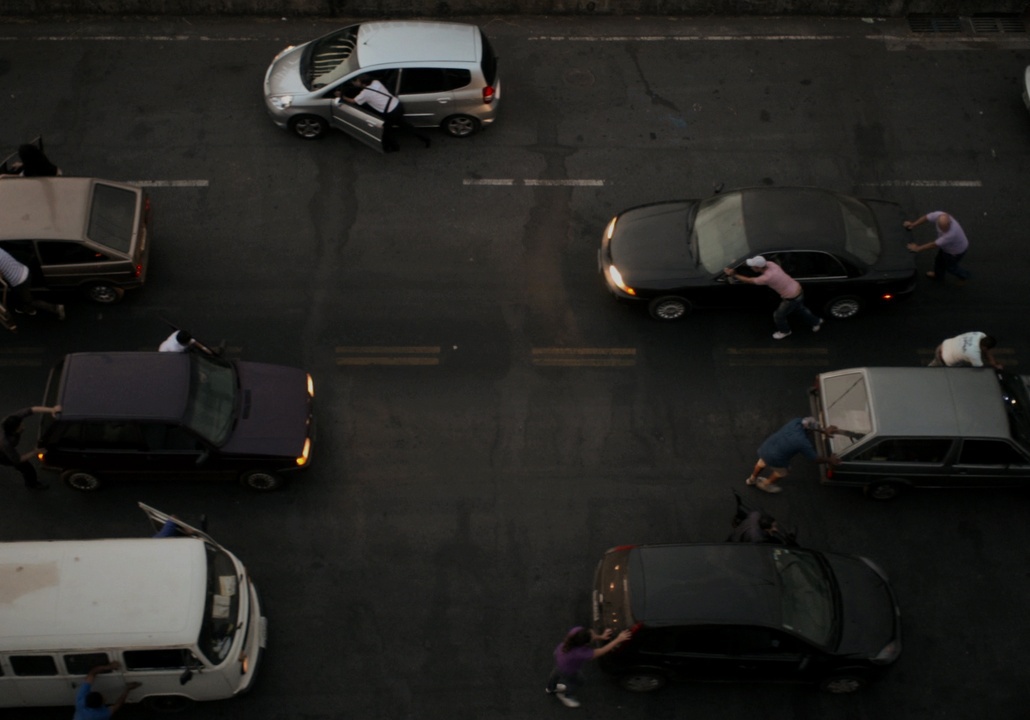
Automóvel (Automobile) 2012 (still)
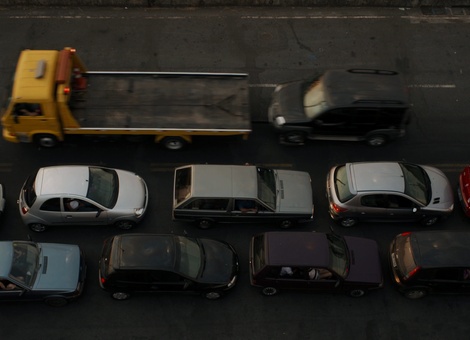
Automóvel (Automobile) 2012 (still)

Automóvel (Automobile) 2012 (still)

Automóvel (Automobile) 2012 (still)

Born 1974, Belo Horizonte, Brazil
Lives and works in Belo Horizonte, Brazil

Cinthia Marcelle’s video and photography deals with interventions in urban spaces or landscapes and frequently incorporates carefully choreographed, repetitive actions and elements of chaos. These works contain a sense of irony, where the absurd is presented with the appearance of certainty. Paradox is one of the concepts most linked to the performance method used by the artist, along with photography and video.

Marcelle’s videos are often shot from one camera angle and depict actions that appear to be happenstances but which become aesthetic occurrences. Her actions create situations that challenge our notions of conventional behaviour by introducing humorous coincidences and connections.

Selected exhibitions (solo):

Zona Temporária, Centro Cultural Banco do Brasil, Rio de Janeiro, 2013; See for been seen, Pinchuk Art Center, Kiev, 2011; This Same World Over, Foyer Gallery, Camberwell College of Arts, London, 2009; Bolsa Pampulha: Cinthia Marcelle, Museu de Arte da Pampulha, Belo Horizonte, 2004. Selected exhibitions (group): Sharjah Biennial 11, Arabic Emirates, 2013; 2nd New Museum Triennial, New York, 2012; Tate Level 2 Gallery, London, 2012; Dundee Contemporary Art, 2012; 29th São Paulo Biennial, 2010; 9th Lyon Biennale, 2007; 9th Havana Biennial, 2006.

‘Marcelle seems to be making a call to a different kind of mobility... that not only looks forward, but also sideways and back.’

Luisa Duarte, writer and curator, Belo Horizonte

Automóvel (Automobile)

2012
Artspace

video projection
7:16min
courtesy of the artist, Galeria Vermelho, São Paulo and Sprovieri Gallery, London
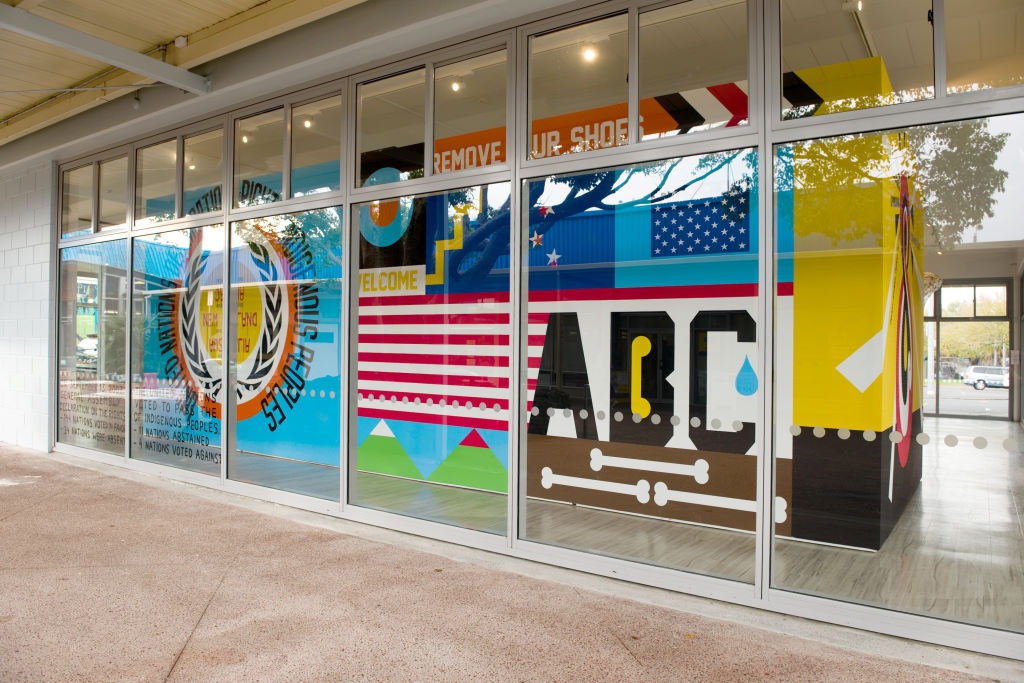
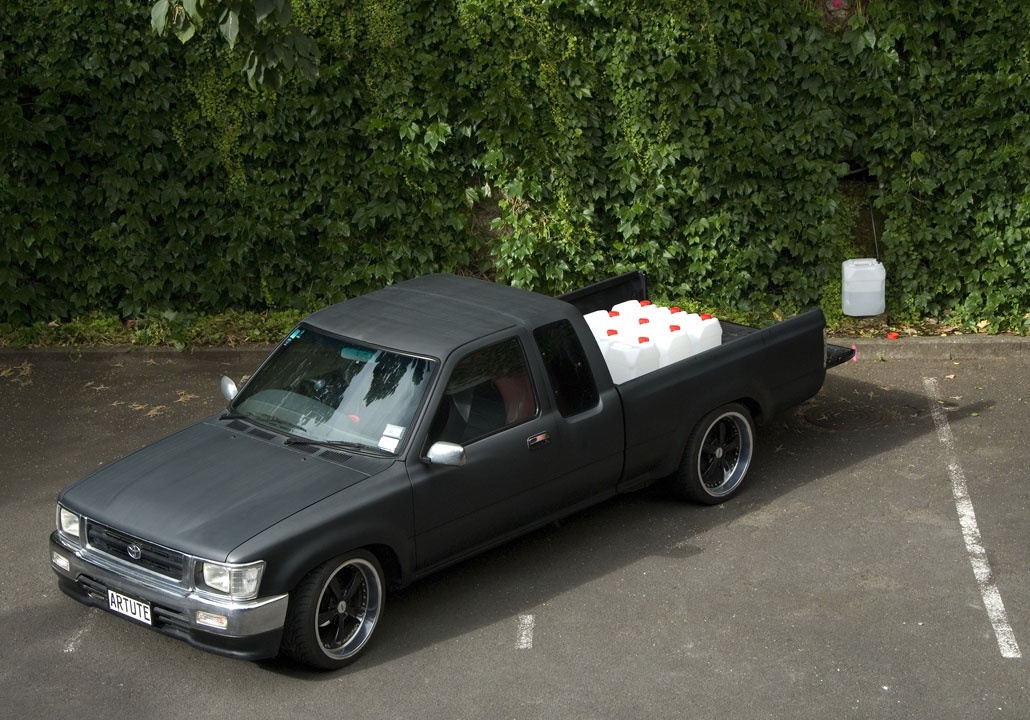
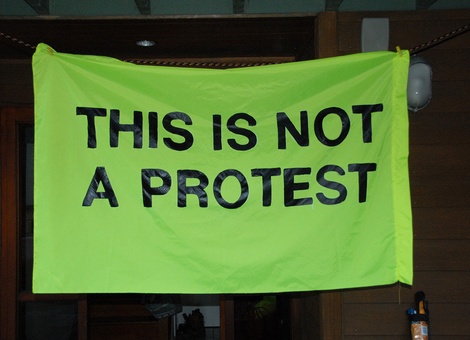
Venue
Model Home,2013

Model Home,2013

Andrew Barrie, Okoshi-ezu (Yatsushiro Monument KILALI, Kumiko Inui), 2008. Photo: Patrick Loo

Andrew Barrie, Okoshi-ezu (Yatsushiro Monument KILALI, Kumiko Inui), 2008. Photo: Patrick Loo

Born in Levin, New Zealand in 1968, Dr Andrew Barrie, is an Auckland-based designer and Professor at the School of Architecture and Planning, The University of Auckland. After completing doctoral studies at Tokyo University, he spent several years as a project architect at Toyo Ito & Associates in Tokyo, before returning to Auckland to work at Cheshire Architects. His design work has won numerous awards in New Zealand and Japan. He is the author of several books on Japanese architecture, and is a regular contributor to architecture and design journals.

Barrie's academic research and exhibition practice includes okoshi-ezu, an ancient Japanese architectural drawing technique often associated with teahouse design, which takes the form of annotated folding paper models. He has been adapting this method for use in modeling contemporary buildings, and in Model Home 2013 extends it further to create a one-to-one paper model of Atelier Bow-Wow's workers' house.

Selected exhibitions (solo): Densities, New Work Studio, Wellington, 1996; Code, Artspace, Auckland, 1999; Unfolding the New Japanese Architecture, State Library of Queensland, Brisbane & Objectspace, Auckland, 2010. Selected exhibitions (group): Architecture to a Fault, 5th International Architecture Exhibition, Venice Biennale, 1991; New Zealand Installation, Milan Triennial, 1996; SD Review, Tokyo & Osaka, 1999; Minna no ie, Museum of Contemporary Art, Tokyo, 2012; Familial Clouds, 13th International Architecture Exhibition, Venice Biennale, 2012; Kiwi Prefab: Cottage to Cutting Edge, Puke Ariki, New Plymouth, 2012.

Model Home

2013
Auckland Art Gallery

For the 5th Auckland Triennial Michael Lin and Atelier Bow Wow collaborated with Professor Andrew Barrie from the University of Auckland to create a life-size paper document of worker housing element of the Model Home project, the sound and video artists were Nanli Lou and Ren Cheng. Andrew Barrie is a specialist in the Japanese technique of paper model building known as okoshi-ezu (folding drawing), and has adapted aspects of this technique for Model Home 2013.


Venue
Bishan Commune,2013

Bishan Commune,2013

Outdoor film screening, Bishan Harvestival, 2011

Outdoor film screening, Bishan Harvestival, 2011

Ou Ning: Bishan Commune: How to Start Your Own Utopia

Ou Ning: Bishan Commune: How to Start Your Own Utopia

Born 1969, Zhangjian, Guangdong, China
Lives and works in Beijing, China

Ou Ning is a graphic designer, editor, curator, filmmaker, writer and lecturer and founder of U-thèque, an independent film and video organisation. He is the founder of the Bishan Commune which brings together artists and intellectuals to get involved in the rural reconstruction movement in China. In 2011 the Commune held its first Harvest Festival in the rural settlement of Bishan. This incorporates music, dance, a small documentary festival and academic panels on rural reconstruction with local and international intellectual speakers.

http://www.alternativearchive.com/ouning/

Selected exhibitions and events:

Museu de Arte Contemporânea da Universidade de São Paulo, 2011; Videotage, Hong Kong, 2011; Tirana Biennial, 2009; Berkeley Art Museum and Pacific Film Archive, 2008; Smithsonian Institution, Washington, 2008; Victoria & Albert Museum, London, 2008; Contemporary Art Centre, Vilnius, 2007; Yokohama International Media Art Festival, 2009; 22nd Milan, Asian, African and Latin American Film Festival, 2012.

‘... Ou Ning and his ‘communards’ are looking to create an alternative social entity...’

Hou Hanru, Curator, 5th Auckland Triennial

Bishan Project

2013
Auckland Art Gallery

sketchbooks, drawings, magazines, archival material, photographs, video, mixed media objects
dimensions variable
courtesy of the artist


Venue
Just in time for too late, (2013)

Just in time for too late, (2013)

Just in time for too late, (2013)

Just in time for too late, (2013)

Born 1943, Grand Rapids, United States of America
Lives and works in San Francisco, United States of America

Emory Douglas created the visual identity for the Black Panther Party and his iconic images came to symbolise the struggles of the movement. As Minister of Culture for the "Black Panther Party" from 1967 until the 1980s, Douglas’ work, described as ‘Militant Chic’, featured in most issues of the newspaper The Black Panther. His work is characterised by strong graphic images of young African American men, women and children. He used the newspaper’s popularity to spur people to action, portraying the poor with empathy and as being unapologetic and ready for a fight.

http://www.emorydouglasart.com/

Selected exhibitions (solo):

Black Panther: The Revolutionary Art of Emory Douglas, Urbis, Manchester, 2008–9; Black Panther: The Revolutionary Art of Emory Douglas, MOCA Pacific Design Center, Los Angeles, 2007–8. Selected exhibitions (group): 16th Biennale of Sydney, 2008; The Black Panther Rank and File, Yerba Buena Center for the Arts, San Francisco, 2006.

‘The values of equality, racial economic justice and fairness are just as relevant today as they ever were.’

Nigel Borell, Kaiwhakahaere, Toi o Manukau, Auckland Council

Untitled

2013
Fresh Gallery Otara

Emory Douglas, Rigo 23, Wayne Youle
painted mural
2940 x 11300
Courtesy of the artists


Venue
Under Discussion, 2005 (video still)

Under Discussion, 2005 (video still)

Returning a Sound, 2004 (video still)

Returning a Sound, 2004 (video still)

(formed 1995) Live and work Puerto Rico

Jennifer Allora
Born 1974, Philadelphia, United States of America
James Calzadilla
Born 1971, Havana, Cuba

Collaborating since 1995, Jennifer Allora and Guillermo Calzadilla have produced an experimental and interdisciplinary body of work, combining performance, sculpture, video and sound. Their Land Mark, 2001–ongoing, project focuses on what the artists describe as the ‘transitional geography’ of Vieques, an inhabited island municipality of Puerto Rico used by the U.S Navy as a weapons-testing range from 1941 to 2003.

http://www.lissongallery.com/#/artists/allora-and-calzadilla/

Interested in questions of social justice the artists set into motion a series of structural couples – inscription and erasure, presence and absence, appearance and disappearance – which link processes of mark-making with counter-memorial claims for rights and justice vis-à-vis specific sites.

Selected exhibitions (solo):

Stop, Repair, Prepare, MoMA, New York, 2010, and Haus der Kunst, Munich, 2008; Allora & Calzadilla, National Museum of Art, Oslo, 2009; Compass & How to Appear Invisible, Temporare Kunsthalle, Berlin, 2009; Never Mind That Noise you Heard, Stedekijk Museum, Amsterdam; Allora & Calzadilla, Kunsthalle Zürich, 2007; Clamor, Serpentine Gallery, London, 2007; Wake Up, The Renaissance Society, Chicago, 2007. Selected exhibition (group): 54th Venice Biennale, 2011.

Half Mast\Full Mast

2010
Auckland Art Gallery

dual-channel HD colour video projection
21:11min
courtesy of the artists and Lisson Gallery


Claire Healy and Sean Cordeiro

Venue
dwell,2013

dwell,2013

dwell,2013

dwell,2013

Sean Cordeiro
Born 1974, Sydney, Australia
Claire Healy
Born 1971, Melbourne, Australia


Claire Healy and Sean Cordeiro met at the New South Wales College of Fine Arts in the 1990s. Avid travellers, their peripatetic lives inform much of their practice as they explore ideas of home and transience, and engage with issues such as real estate, permutations of space and modes of living. They are best known for transforming everyday objects into large-scale and provocative sculptures and installations. Through the presentation of the deconstructed and the reassembled Healy and Cordeiro literally unpack notions of domicide, and make us question our own materialistic tendencies and the impermanence of occupation.

http://www.claireandsean.com/

Selected exhibitions (solo):

Claire Healy & Sean Cordeiro, Museum of Contemporary Art Australia, Sydney, 2012; Are We There Yet? Corcoran Gallery of Art, Washington DC, 2011; Par Avion, Frey Norris Contemporary & Modern, San Francisco, 2011; Future Furnishings, Nature Morte Gallery, Berlin, 2012; The Ultimate Field Trip, Akiyoshidai International Artist Village, Yamaguchi, 2010; Prems, La BF15, Lyon, 2009. Selected exhibitions (group): Setouchi Art Festival, Setouchi, 2010; 53rd Venice Biennale, 2009; Optimism, Gallery of Modern Art | Queensland Art Gallery, Brisbane, 2008.

‘Enigmatic clues hint at a narrative – somewhat playful, somewhat uncomfortable...’

Beatrice Gralton, Curator Visual Arts, Carriageworks, Sydney

dwell

2013
Auckland Art Gallery

mixed media installation
dimensions variable
courtesy of the artists, Roslyn Oxley9 Gallery, Sydney and Gallery Wendi Norris, San Francisco.


Venue
If You Were To Work Here: the Mood in the Museum, 2013

If You Were To Work Here: the Mood in the Museum, 2013

Born 1966, Ashburton
Lives and works in Auckland, New Zealand

Peter Robinson’s recent work investigates both the materiality and metaphoric potential of his chosen medium. Whether it is the massive weightless volume of polystyrene forms or the densely contracted materiality of felt, Robinson’s sculptural propositions play out various oppositions such as density and lightness, and dispersion and compression. His felt sticks reference the formalist legacies of minimalist, post-minimalist and conceptual art, conflating these iconic art-historical conventions with both traditional Māori abstraction and taonga (treasure) forms, and genetic or binary codes, to activate a contemporary recoding and recontextualisation.

Selected exhibitions (solo): Defunct Mnemonics, Peter McLeavey Gallery Wellington, 2012; Structure and Subjectivity, Sue Crockford Gallery, Auckland, 2012; Essential Security, Sutton Gallery, Melbourne 2011; Modern Standards, Sue Crockford Gallery, Auckland, 2010, Wellington, 2010; The Influence of Anxiety, The Centre for Drawing Project Space, London, 2010; Polymer Monoliths, Artspace, Sydney and Institute of Modern Art, Brisbane, 2009; Snow Ball Blind Time, Govett-Brewster Art Gallery, New Plymouth, 2008; Soft Rock Baroque, Peter McLeavey Gallery, Wellington2008; Concatenation and Dispersion, Sutton Gallery, Melbourne, 2007; ACK!, Artspace, Auckland, NZ, 2006;The Humours, Dunedin Public Art Gallery,2005

Selected exhibitions (group): All our relations, 18th Biennale of Sydney, 2012; De-Building, Christchurch Art Gallery, 2011; The Walters Prize, Auckland Art Gallery, 2008; Three Colours: Gordon Bennett and Peter Robinson, Heide Museum of Modern Art, Melbourne, 2004; Centre of Attraction, 8th Baltic Triennale of International Art, Vilnius 2002; bi-polar, 49th Venice Biennale, 2001.

‘Peter Robinson, at Auckland Museum, reminds us that Conceptual art can jolt viewers into revisiting the perceived and the accepted.’

Marcus Boroughs, Head of Public Programmes, Auckland War Memorial Museum Tamaki Paenga Hira

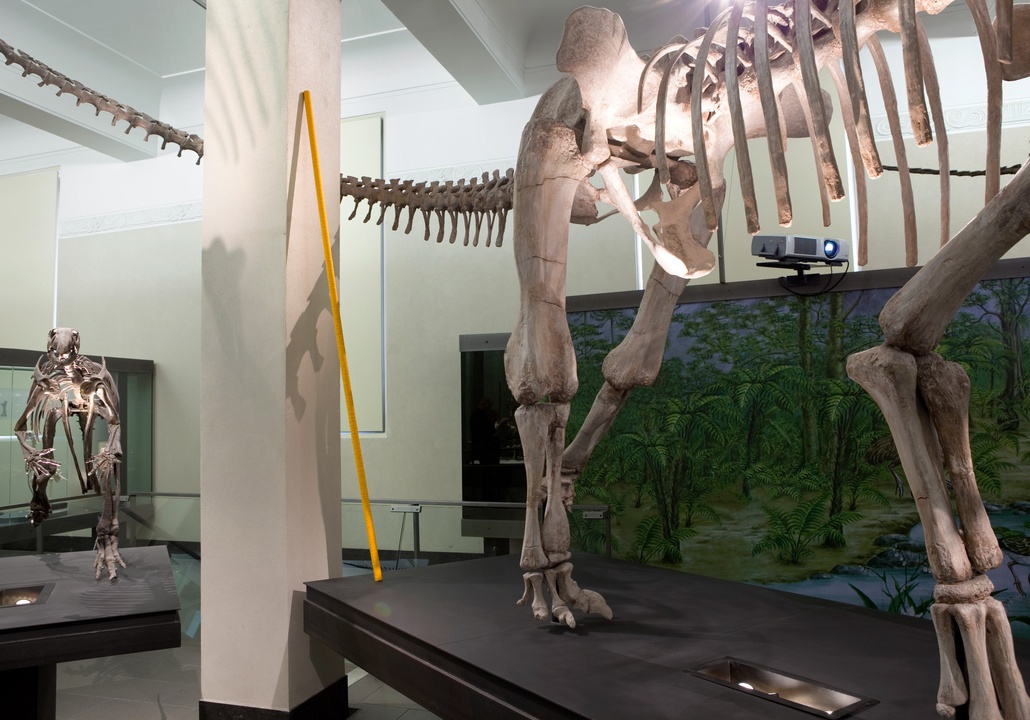
If You Were To Work Here: the Mood in the Museum

2013
Auckland War Memorial Museum

240 felt-covered aluminium rods
2500 x 32 mm (each), overall dimensions variable
courtesy of the artist and Hopkinson Cundy, Auckland