Venue
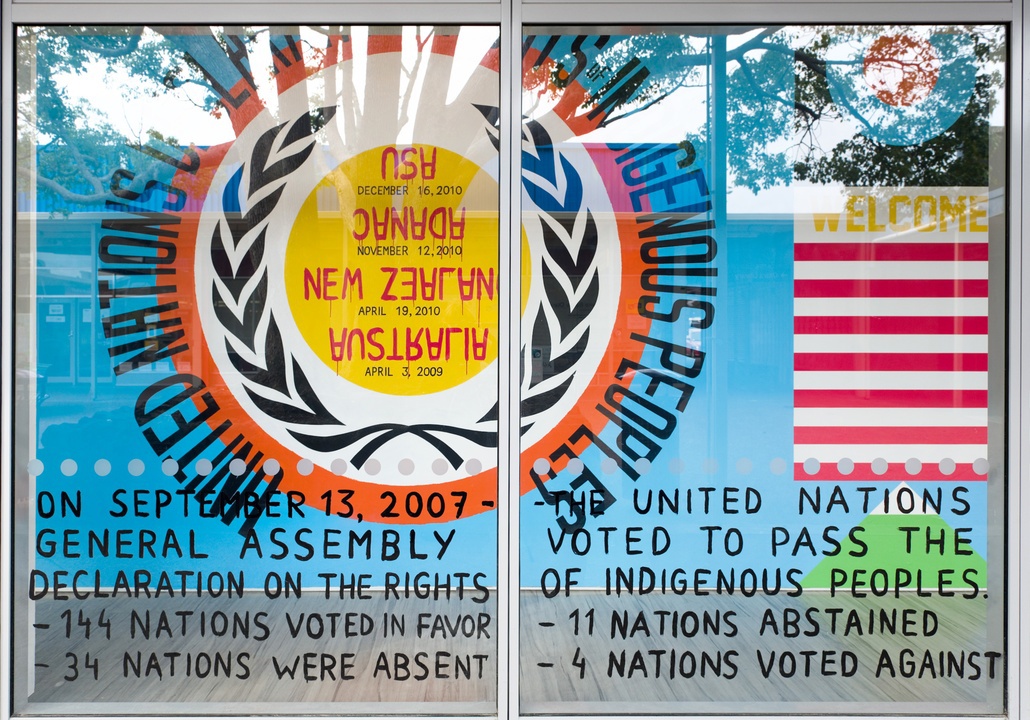
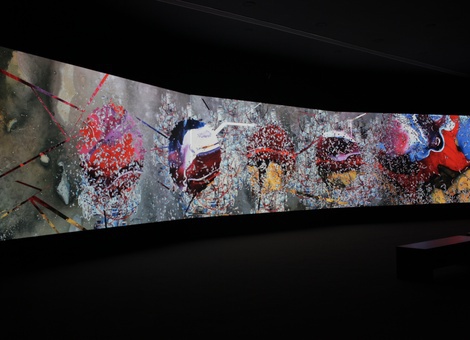
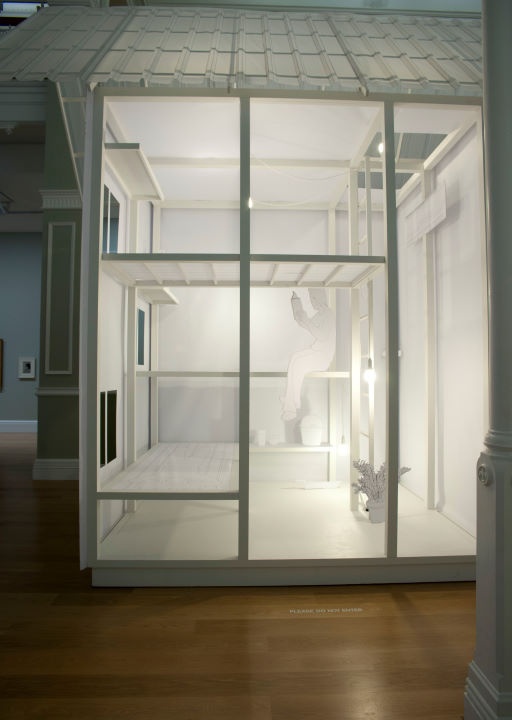
The Garden of Pine – As Fierce as a Tiger II, 2010

The Garden of Pine – As Fierce as a Tiger II, 2010

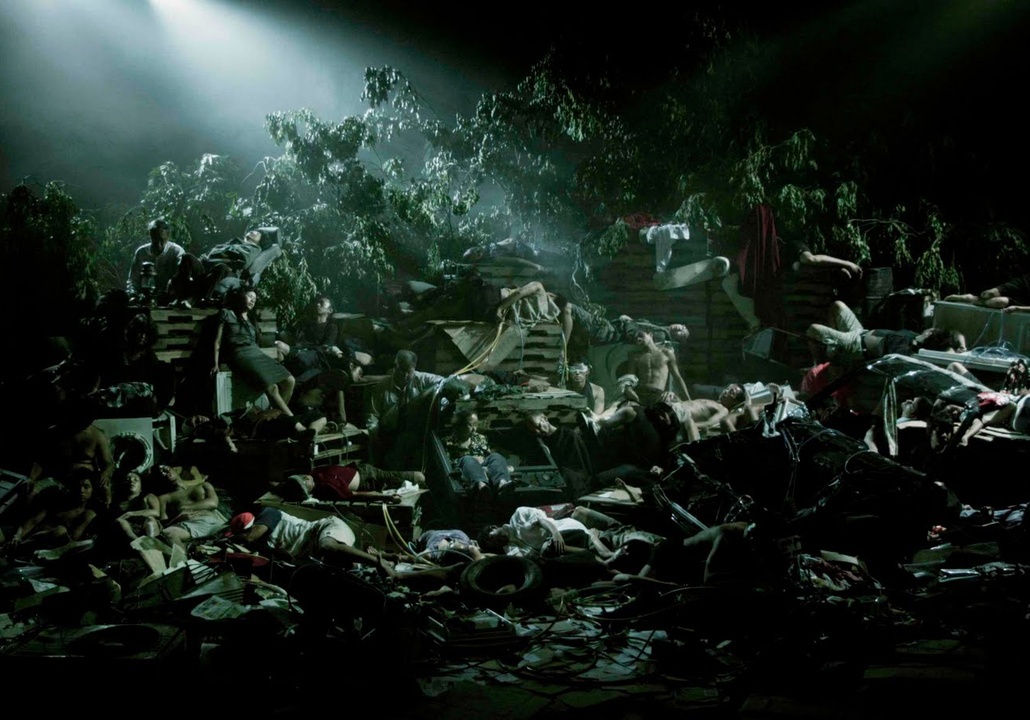
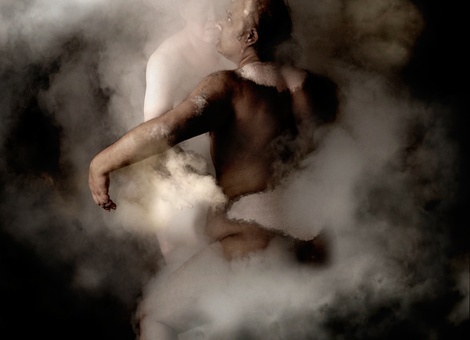
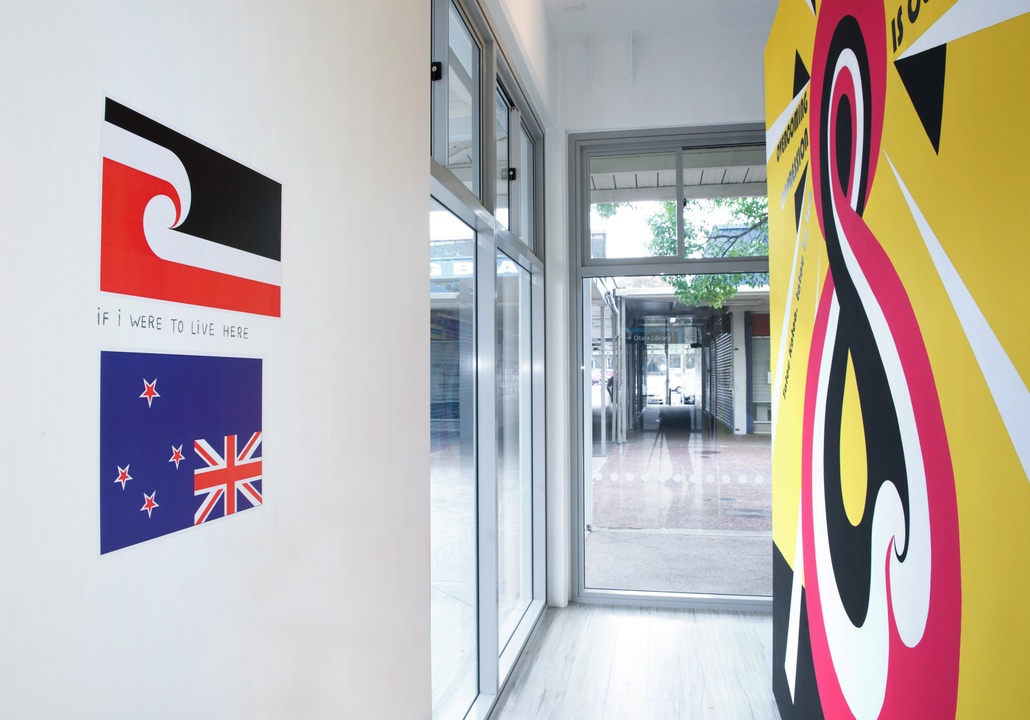
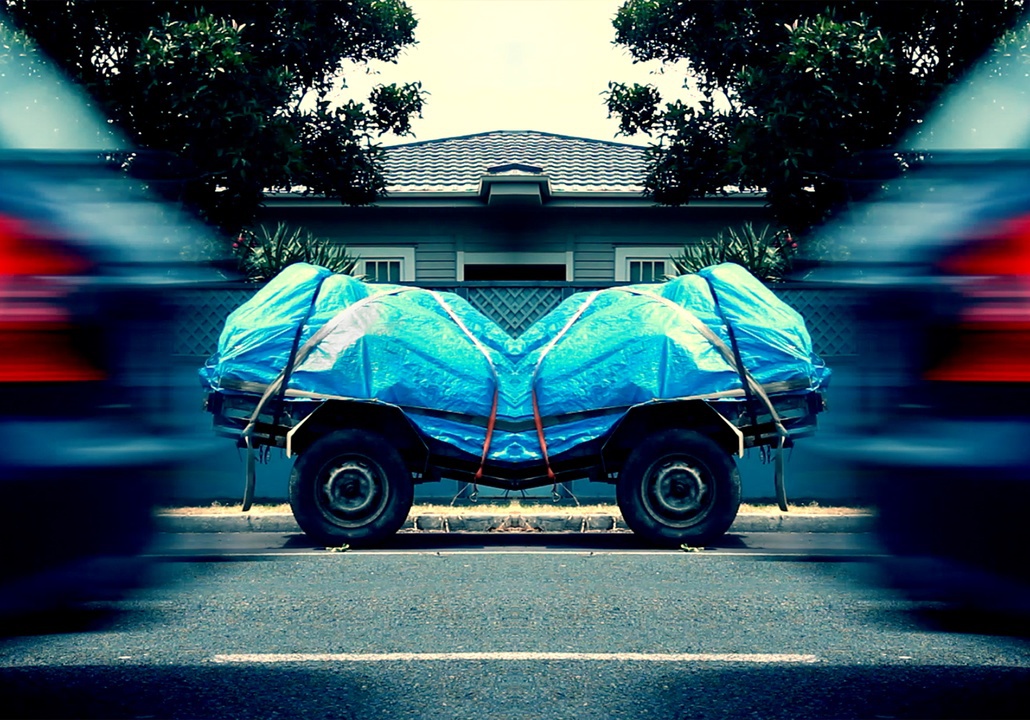
One Cannot Break the Law Without Upholding the Law. All Laws Must Be Broken, 2013

One Cannot Break the Law Without Upholding the Law. All Laws Must Be Broken, 2013

One Cannot Break the Law Without Upholding the Law. All Laws Must Be Broken, 2013

One Cannot Break the Law Without Upholding the Law. All Laws Must Be Broken, 2013

(formed 2002) Live and work in Yangjiang, Guangdong Province, China
Zheng Guogu Born 1970, Yangjiang, Guangdong Province, China
Chen Zaiyan Born 1971, Yangchun, Guangdong Province, China
Sun Qinglin Born 1974, Yangjiang, Guangdong Province, China

Yangjiang Group was founded in 2002 by Zheng Guogu, Chen Zaiyan and Sun Qinglin in Yangjiang, China. The direction of their work is driven by Chinese classical philosophy, the traditions of Chinese calligraphy, and notions of social transformation. In the 2009 Lyon Biennale Yangjiang Group created The Pine Garden – As Fierce As a Tiger, a work which brought art, football and chance together in a traditional Chinese garden setting.

Selected exhibitions (solo):

Yangjiang Group – After Dinner Shu Fa at Cricket Pavilion, Eastside Projects, Birmingham, 2012; Garden of Pine – Also Fierce Than Tiger II, Tang Contemporary Art Centre, Beijing, 2010. Selected exhibitions (group): 10th Lyon Biennale, 2009; Sprout from White Nights, Bonniers Konsthall, Stockholm, 2008; dOCUMENTA (12), Kassel, 2007; The Second Guangzhou Triennial-BEYOND: An Extraordinary Space of Experimentation for Modernization, Guangdong Museum of Art, 2005.

‘... a place where we learn about ourselves ... in this historical moment, this society, this city and this way of life.’

Echo Janman, Public Programmes Manager, Elam School of Fine Arts, The University of Auckland

Shu Tu Tong Gui

2013
George Fraser Gallery

(Calligraphy and Scratching Leading to the Same Thing)
participatory community event, tea residue, calligraphy
courtesy of the artists and Tang Contemporary Art, Beijing


Venue
Libellule bleue (Blue Dragonfly), 2009/2011

Libellule bleue (Blue Dragonfly), 2009/2011

Le salon (The Living Room), 2008/2011

Le salon (The Living Room), 2008/2011

Born 1971, Paris, France
Lives and works in Tangier, Morocco

Yto Barrada’s art reflects her experiences of living in Tangier, and the realities and struggles of life in a city undergoing rapid development and modernisation. Her photography captures the quiet dramas that play out when the diversity of local people and wildlife give way to the mono-cultural visions of planners and developers. Barrada’s work reveals a ramshackle kind of modernity and the existential issues of a society dominated by a desire to leave.

http://www.ytobarrada.com/

Selected exhibitions (solo):

Riffs, Deutsche Guggenheim, Berlin, 2012; The Strait Project, Witte de With, Rotterdam, 2004; Selected exhibitions (group): I Decided Not to Save the World, Tate Modern, London, 2012; Palais de Tokyo, Paris, 2012; 54th Venice Biennale, 2011; Hand Me Downs, film screening at MoMA, San Francisco, New York, 2011.

‘Barrada likens her multifaceted practice to a stack of Russian dolls, where one piece fits into another and another still.’

Kaelen Wilson-Goldie, independent writer and critic, Beirut.

Casa Barata

2001
Artspace

Artspace
c-type print
1000 x 1000 mm

Rue de la Liberté, Tanger

2000
Artspace

c-type print 1250 x 1250 mm

Tunnel – Ancien chantier d'étude de la liaison fixe Maroc-Espagne

2013
Artspace

(Tunnel – Disused Survey Site for a Morocco-Spain Tunnel), Tanger 2002
c-type print
800 x 800 mm

Briques (Bricks)

2003
Artspace

c-type print
1500 × 1500 mm

Le salon

2008
Artspace

(The Living Room)
c-type print
1500 x 1500 mm

Nuancier de roses

2008
Artspace

(Pink Color Chart)
c-type print
1250 x 1250 mm

Libellule bleue

2009
Artspace

(Blue Dragonfly)
c-type print
1250 x 1250 mm


Sidi Hssein, Beni Said, Rif

2009
Artspace

c-type print
1500 × 1500 mm


Restaurant, Villa Harris, fig. 2

2010
Artspace

c-type print
1250 x 1250 mm
courtesy of the artist and Sfeir-Semler Gallery, Hamburg

Venue
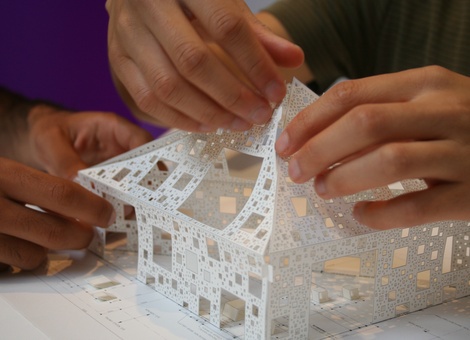
Kauri-oake, 2013

Kauri-oake, 2013

Kauri-oake, 2013

Kauri-oake, 2013

Kauri-oake, 2013

Kauri-oake, 2013

(formed 2007) Live and work in Sydney, Australia
Tessa Zettel Born 1980, Sydney, Australia
Karl Khoe Born 1980, Sydney, Australia

Artists and co-directors of Makeshift, Tessa Zettel and Karl Khoe collaborate on interdisciplinary projects that encompass live art, sculpture and installation, drawing, printmaking, writing, curating and design. As redirective practitioners, their work imagines or enacts other ways of living that are generative of sustainment, dialogue and new economies. Site-responsive and participatory, these works are shaped by provisional communities and appear as durational interventions. Such projects involve opening up spaces of dialogue or exchange (often facilitated by the presence of food), marking time to slow down and be attentive, and a revaluing of obscured cultural knowledge, stories and practices.

http://www.makeshift.com.au/

http://kaurioke.com/

Selected exhibitions (solo):

Making Time, Performance Space, Sydney, 2013; A Leaf from the Book of Cities, National Institute for Experimental Arts/City of Sydney, 2012; Make-do Garden City, 4A Centre for Contemporary Asian Art, Sydney, 2010; Colony Collapse, Firstdraft, Sydney, 2010. Selected exhibitions (group): IASKA Spaced: Art Out of Place, Fremantle Arts Centre, 2012; Primavera 2011, Museum of Contemporary Art, Sydney, 2011; Sister Cities Biennial: Urbanition, San Francisco Arts Commission Gallery/Carriageworks, San Francisco/Sydney, 2011; In the Balance: Art for a Changing World, Museum of Contemporary Art, Sydney, 2010.

‘... prefaces pleasure and community spirit over economic benefit.’

David Cross, Associate Professor in Fine Art, Massey University, Wellington

Kauri-oke!

2013
Fresh Gallery Otara

New Zealand kauri, karaoke machine and mixed media, folk songs
dimensions variable
courtesy of the artists


Venue
Autoconstrucción, 2009 (still)

Autoconstrucción, 2009 (still)

Autoconstrucción, 2009 (still)

Autoconstrucción, 2009 (still)

Born 1968, Mexico City, Mexico
Lives and works in Mexico City, Mexico

Abraham Cruzvillegas’ practice is informed by growing up in Ajusco, a district of Mexico City. Cruzvillegas transforms everyday objects including pieces of scrap metal, plastic rubbish, and animal waste into art. Stark and somewhat precarious in construction, these dynamic assemblage sculptures retain a deep mystical quality. His recent work addresses solidarity, collaboration and optimism, and his construction of art using readily available materials operates as a metaphor for the articulation of individual identity and place.

Selected exhibitions (solo):

Abraham Cruzvillegas: The Autoconstrucción Suites, Walker Art Centre, Minneapolis, 2013; Abraham Cruzvillegas, Kurimanzutto, Mexico City, 2012; Abraham Cruzvillegas: Autoconstrucción: The Optimistic Failure of a Simultaneous Promise, Modern Art Oxford, 2011; The Magnificent Seven: Abraham Cruzvillegas Capp Street Project, CCA Wattis Institute Event, San Francisco, 2009; Autoconstrucción: The Soundtrack, The Centre for Contemporary Arts, Glasgow, 2008. Selected exhibitions (group): Garden of Reason, Ham House, London, 2012; 30th São Paulo Biennial, 2012; dOCUMENTA (13), Kassel, 2012; 12th Istanbul Biennial, 2011; Unmonumental, New Museum, New York, USA, 2007; 50th Venice Biennale, 2003.

Autoconstrucción

2009
Auckland Art Gallery

HD video, single-channel, colour, sound
63:00min
courtesy of the artist and kurimanzutto, Mexico City


Venue
Architecture Now! Etat des Lieux #2, 2010 (still)

Architecture Now! Etat des Lieux #2, 2010 (still)

Architecture Now! Etat des Lieux #2, 2010 (still)

Architecture Now! Etat des Lieux #2, 2010 (still)

Born 1970,Tangier, Morocco
Lives and works between Tangier, Morocco and Paris, France


mounir fatmi makes art which directly addresses global current events by looking at the origins and symptoms of global issues, as well as speaking to those whose lives are affected by specific events. In his recent work, fatmi has criticised the formation of supranational political and economic structures in the late 1990s and offered an Arab perspective on megalopolises and urban architecture. fatmi defines a megalopolis as architectural development in cities that is carried out at speed and without taking time to consider or reflect upon the wellbeing of the people who live there.

http://www.mounirfatmi.com/

Selected exhibitions (solo):

Oriental Accident, Lombard Freid Projects, New York, 2012; The Angel’s Black Leg, Galerie Conrads, Düsseldorf, 2011; Seeing is Believing, Galerie Hussenot, Paris, France, 2010; minimalism is capitalist, Galerie Conrads, Düsseldorf, 2009; Obstacle Next Flag, Migros Museum, Zürich, 2003. Selected exhibitions (group): Ici, Ailleurs, Tour Panorama, Marseille, 2013; 6th Québec Biennale, 2012; 54th Venice Biennale, 2011; 12th Cairo Biennale, 2010; 10th Lyon Biennale, 2009; 10th Brussels Biennale, 2008.

‘... [mounir] looks at a world dominated by new technologies, from the vantage point of the Arab world, with an ironic gaze.’

Ali Akay, Professor of Sociology, University of Fine Arts Mimar Sinan; curator, Istanbul

Architecture Now! Etat des lieux #1

2010
Fresh Gallery Otara

colour HD video, with stereo sound
11:33min

Architecture Now! Etat des lieux #3, I lived on the 3rd Floor in Tower no. 2

2010
Fresh Gallery Otara

colour HD video, stereo sound
10:12min

Architecture Now! Etat des lieux #4, City of urgency

2010
Fresh Gallery Otara

colour HD video, stereo sound
9:13min

The VF Project

2010
Fresh Gallery Otara

colour HD video projection, stereo sound
28:00min
courtesy of the artist and Analix Forever, Geneva, Goodman Gallery, Johannesburg, Cape Town


Venue
A Perfect Home: The Bridge Project, 2010 (video still)

A Perfect Home: The Bridge Project, 2010 (video still)

A Perfect Home: The Bridge Project, 2010 (video still)

A Perfect Home: The Bridge Project, 2010 (video still)

(born 1962) Seoul, South Korea
Lives and works in New York, London and Seoul.

Do-Ho Suh’s sculptures and installations explore spatial dynamics and issues of cultural difference. His site-specific installations act like microcosms of the postmodern, globalised world, questioning the boundaries of identity in relation to public and private space. Suh’s work, which draws from his Korean background and life in the West, addresses the place of individual and collective identities in a global society. Through the use of architectural elements and references to the body, Suh evokes a trans-cultural life where the dynamics of space, culture and connection create unanticipated form.

Selected exhibitions (solo):

Hiroshima MOCA, Hiroshima, Japan, 2012; Leeum Samsung Museum, Seoul, South Korea, 2012; Tate Modern, London, UK, 2011; Storefront for Art and Architecture, New York, USA, 2010; 2001 Venice Biennale, Italy. Selected exhibitions (group):Luminous: The Art of Asia, Seattle Art Museum, 2011; 2010 Liverpool Biennial, Liverpool, UK; 2010 Venice Architecture Biennale, Italy; Your Bright Future: 12 Contemporary Artists from Korea, Los Angeles County Museum of Art, USA, 2009; Psycho Buildings, Hayward Gallery London, UK, 2008.

‘... there is no freedom in architecture. In fact freedom is a ruse Suh points to...’

Yasmeen M Siddiqui, curator and essayist, Louisville, Kentucky.

A Perfect Home: The Bridge Project

2010
Auckland Art Gallery

synchronised four-monitor animated digital slide presentation, two single-channel videos, sound
11:00min
© Do Ho Suh
courtesy of the artist


Venue
Parallax, 2013 (detail)

Parallax, 2013 (detail)

Parallax, 2013 (still)

Parallax, 2013 (still)

Born 1969, Lahore, Pakistan
Lives and works in New York City, United States of America

Pakistani-born American artist, Shahzia Sikander is best known for her experimentation with the formal constructs of Indo-Persian miniature painting in a variety of formats and mediums, including video, animation, mural and collaboration with other artists. Over the years, she has pioneered an interpretive and critically charged approach to the genre of miniature painting. Sikander’s interest in paradox, societies in flux, and formal and visual disruption as a means to cultivate new associations also underpins her work.

Selected exhibitions (solo):

Authority as Approximation,Para/Site, Hong Kong, 2009; Shahzia Sikander Selects, Cooper-Hewitt National Design Museum, New York, 2009; Intimate Ambivalence, IKON Gallery,Birmingham, 2008; Shahzia Sikander, Museum of Contemporary Art, Sydney, 2007; Shahzia Sikander, Irish Museum of Modern Art, Dublin, 2007.

‘Sikander’s work brings together the elegant sensibility and attitude of the miniature tradition with contemporary materials and scale...’

Charlotte Huddleston, Director, St Paul St Gallery, AUT University Auckland

Parallax

2013
ST Paul St

three-channel HD video animation, surround sound
music by Du Yun
15:30min
courtesy of the artist and Pilar Corrias Gallery


Venue
If You Were To Work Here: the Mood in the Museum, 2013

If You Were To Work Here: the Mood in the Museum, 2013

Born 1966, Ashburton
Lives and works in Auckland, New Zealand

Peter Robinson’s recent work investigates both the materiality and metaphoric potential of his chosen medium. Whether it is the massive weightless volume of polystyrene forms or the densely contracted materiality of felt, Robinson’s sculptural propositions play out various oppositions such as density and lightness, and dispersion and compression. His felt sticks reference the formalist legacies of minimalist, post-minimalist and conceptual art, conflating these iconic art-historical conventions with both traditional Māori abstraction and taonga (treasure) forms, and genetic or binary codes, to activate a contemporary recoding and recontextualisation.

Selected exhibitions (solo): Defunct Mnemonics, Peter McLeavey Gallery Wellington, 2012; Structure and Subjectivity, Sue Crockford Gallery, Auckland, 2012; Essential Security, Sutton Gallery, Melbourne 2011; Modern Standards, Sue Crockford Gallery, Auckland, 2010, Wellington, 2010; The Influence of Anxiety, The Centre for Drawing Project Space, London, 2010; Polymer Monoliths, Artspace, Sydney and Institute of Modern Art, Brisbane, 2009; Snow Ball Blind Time, Govett-Brewster Art Gallery, New Plymouth, 2008; Soft Rock Baroque, Peter McLeavey Gallery, Wellington2008; Concatenation and Dispersion, Sutton Gallery, Melbourne, 2007; ACK!, Artspace, Auckland, NZ, 2006;The Humours, Dunedin Public Art Gallery,2005

Selected exhibitions (group): All our relations, 18th Biennale of Sydney, 2012; De-Building, Christchurch Art Gallery, 2011; The Walters Prize, Auckland Art Gallery, 2008; Three Colours: Gordon Bennett and Peter Robinson, Heide Museum of Modern Art, Melbourne, 2004; Centre of Attraction, 8th Baltic Triennale of International Art, Vilnius 2002; bi-polar, 49th Venice Biennale, 2001.

‘Peter Robinson, at Auckland Museum, reminds us that Conceptual art can jolt viewers into revisiting the perceived and the accepted.’

Marcus Boroughs, Head of Public Programmes, Auckland War Memorial Museum Tamaki Paenga Hira

If You Were To Work Here: the Mood in the Museum

2013
Auckland War Memorial Museum

240 felt-covered aluminium rods
2500 x 32 mm (each), overall dimensions variable
courtesy of the artist and Hopkinson Cundy, Auckland


Claire Healy and Sean Cordeiro

Venue
dwell,2013

dwell,2013

dwell,2013

dwell,2013

Sean Cordeiro
Born 1974, Sydney, Australia
Claire Healy
Born 1971, Melbourne, Australia


Claire Healy and Sean Cordeiro met at the New South Wales College of Fine Arts in the 1990s. Avid travellers, their peripatetic lives inform much of their practice as they explore ideas of home and transience, and engage with issues such as real estate, permutations of space and modes of living. They are best known for transforming everyday objects into large-scale and provocative sculptures and installations. Through the presentation of the deconstructed and the reassembled Healy and Cordeiro literally unpack notions of domicide, and make us question our own materialistic tendencies and the impermanence of occupation.

http://www.claireandsean.com/

Selected exhibitions (solo):

Claire Healy & Sean Cordeiro, Museum of Contemporary Art Australia, Sydney, 2012; Are We There Yet? Corcoran Gallery of Art, Washington DC, 2011; Par Avion, Frey Norris Contemporary & Modern, San Francisco, 2011; Future Furnishings, Nature Morte Gallery, Berlin, 2012; The Ultimate Field Trip, Akiyoshidai International Artist Village, Yamaguchi, 2010; Prems, La BF15, Lyon, 2009. Selected exhibitions (group): Setouchi Art Festival, Setouchi, 2010; 53rd Venice Biennale, 2009; Optimism, Gallery of Modern Art | Queensland Art Gallery, Brisbane, 2008.

‘Enigmatic clues hint at a narrative – somewhat playful, somewhat uncomfortable...’

Beatrice Gralton, Curator Visual Arts, Carriageworks, Sydney

dwell

2013
Auckland Art Gallery

mixed media installation
dimensions variable
courtesy of the artists, Roslyn Oxley9 Gallery, Sydney and Gallery Wendi Norris, San Francisco.


Studio Mumbai (Bijoy Jain)

Copper House II, Chondi, Maharashtra, India, 2010

Copper House II, Chondi, Maharashtra, India, 2010

Palmyra House, Nangaon, Maharashtra, India, 2007

Palmyra House, Nangaon, Maharashtra, India, 2007

Palmyra House, Nangaon, Maharashtra, India, 2007

Palmyra House, Nangaon, Maharashtra, India, 2007

Born 1965, Mumbai, India
Lives and works in Mumbai, India


Bijoy Jain is an architect and founder of Studio Mumbai, a contemporary and award-winning architectural practice drawing on the traditional skills and expertise of India’s craftspeople. Creating a studio where skilled stonemasons, wood workers and other traditional trades do not simply execute his projects but are regarded as advisors and collaborators, Jain has enabled a rediscovery of traditional knowledge and the sustainable use of local resources.

Drawing upon the Indian landscape and regarding it as a resource, Studio Mumbai have created buildings as diverse as private residences, public spaces, research centres and rural retreats formed by local climatic conditions, materials and technologies.

‘An architectural practice almost unique in the world, Studio Mumbai redefines the construction process...’

Andrew Barrie